A mixed-use wellness and technology innovation district redefining Salem's urban identity

Now City
West Salem

10-Year Phased Development Business Plan

Presented by Now City Inc  ·  June 2026  ·  18 Acres  ·  Willamette Riverfront
The Vision

A walkable neighborhood destination on the Willamette

Create an 18-acre mixed-use river-adjacent district that combines housing, retail, entertainment, hospitality, work space and community amenities into a walkable neighborhood destination for West Salem.

The district will be developed through a phased strategy that minimizes upfront risk, creates early value, generates interim cash flow, and maximizes long-term Opportunity Zone investment returns.

~780
Residential units across four phases
100–150
Lease-to-own townhouses
60,000+ SF
Innovation & commercial space
100,000+ SF
Sports & recreation facility
100-key
Hotel with meeting & event space
10 yrs
Opportunity Zone investment horizon
The Masterplan

18 acres, four phases, one connected district

An incrementally phased district anchored by an innovation and residential catalyst, expanding into family neighborhoods, a sports & entertainment destination, and river-adjacent value creation.

Illustrative masterplan of the 18-acre West Salem district
Illustrative masterplan — West Salem Wellness & Entertainment District (18AC Masterplan V2, June 2026)
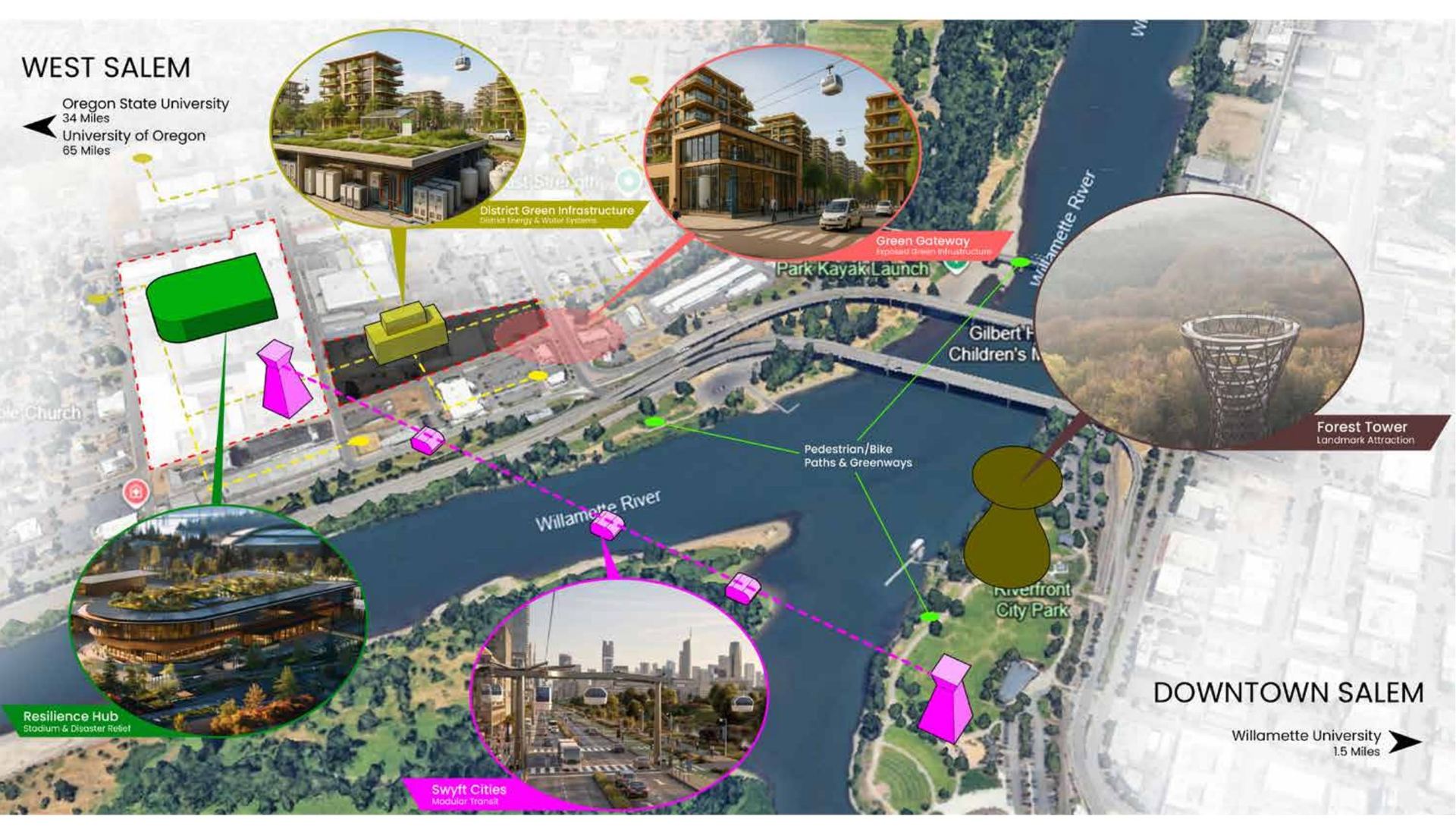
Regional context map connecting West Salem and Downtown Salem
Regional context — West Salem, the Willamette River & Downtown Salem
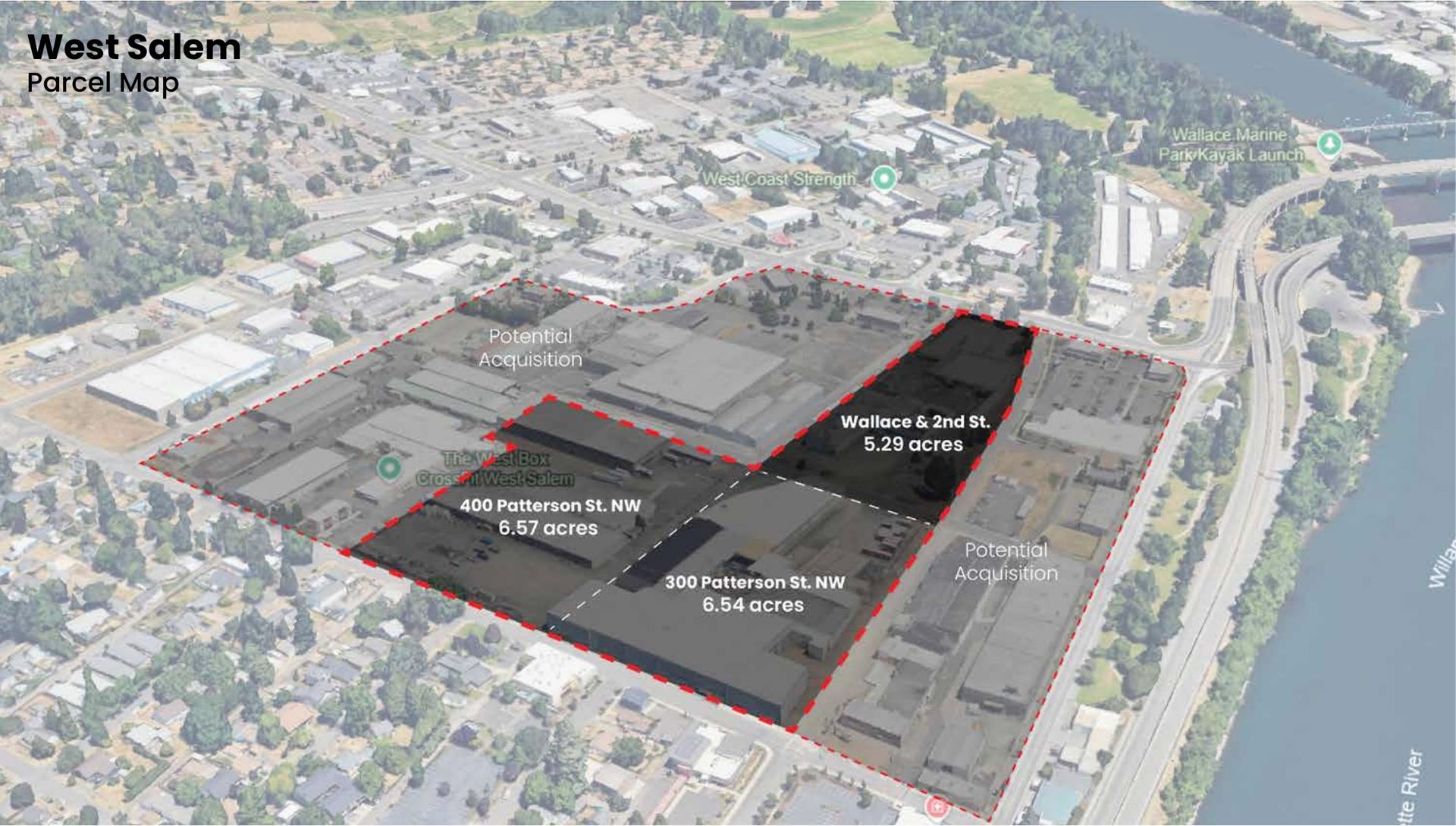
Aerial photo of district parcels with boundaries
District parcels — aerial view of the assemblage
Why West Salem, Why Now

Land use, policy, and market momentum are aligned

In Salem, Oregon — the under-appreciated and growing capital — Now City is catalyzing the transformation of an aging light-industrial corridor into a high-density, mixed-use innovation and entertainment district. The City has already rezoned the area to support this shift, creating a rare window where land use, policy, and market momentum are aligned.

Why Salem

  1. 45 minutes to Portland — international airport, talent, culture
  2. 60 minutes to the Oregon Coast
  3. Surrounded by vineyards, farms, rivers, and forests
  4. Four-season outdoor living — hiking, cycling, water, wine, mountains
  5. Strong in-migration from California and the Pacific Northwest
  6. Undervalued relative to quality of life and long-term upside

City of Salem Alignment

  1. Expands Salem's long-term tax base while preserving near-term employment
  2. Delivers housing supply calibrated to local incomes and workforce needs
  3. Activates the Willamette Riverfront and strengthens west–east connectivity
  4. Reduces infrastructure strain through walkability and daily services
  5. Phases density, traffic, and investment with absorption thresholds
  6. Captures regional growth while maintaining local control and fiscal discipline

Oregon State Alignment

  1. Strengthens housing supply, job creation, and long-term tax base growth at once
  2. Phased, infrastructure-aligned approach supporting workforce stability
  3. Aligned with statewide housing production and talent retention goals
  4. Advances OZ and urban renewal tools without public balance-sheet risk
  5. Supports construction, small business, and innovation-sector employment
  6. A replicable district framework for mid-sized Oregon cities

Market context drawn from the Now City West Salem Confidential Investment Summary (May 2026).

Initial Land Contribution Strategy

The Mark May property: securing the catalyst parcel

The project begins with securing a Letter of Intent (LOI) with Mark May for the 5.29-acre catalyst parcel.

The LOI establishes a framework whereby Mark May agrees to contribute the land into a future joint venture development entity, subject to the successful completion of due diligence and capitalization of the project.

Proposed Structure

  • Mark May retains ownership until equity financing is identified and secured
  • Now City leads planning, due diligence, fundraising, entitlements, and development execution
  • The parties negotiate definitive JV terms during the LOI period
  • Upon securing the required capital stack, the property is contributed into the project entity
  • Mark May receives an agreed ownership interest and participates in future value creation

Conditions for Land Contribution

Land contribution becomes effective upon:

  • Completion of due diligence
  • Approval of development strategy
  • Securing equity commitments
  • Execution of definitive JV agreements

Benefits to Mark May

  • Participates in long-term upside rather than selling today
  • Retains alignment with project success
  • Benefits from value creation across the entire district
  • Creates generational wealth through ownership participation

Benefits to Now City

  • Reduces upfront land acquisition costs
  • Improves project feasibility
  • Preserves capital for entitlement and vertical development
  • Creates a catalyst project capable of increasing the value of adjacent Blackburn properties

Development Flow

1LOI
2Due Diligence & Capital Raise
3Financing Secured
4Land Contribution
5JV Formation
6Phase 1 Construction
7District Expansion
Executive Development Strategy

A simple value creation sequence

Control Land
Create Value
Build Catalyst Phase
Expand District
Stabilize
Exit

Rather than acquiring all parcels immediately, Now City will first secure site control, complete due diligence, and entitle the district. This approach reduces risk while preserving flexibility across multiple financing and acquisition pathways.

A lease-to-own adaptive reuse layer sits inside Phase 0 rather than competing with the 10-year plan. The 300 Patterson Middle Property and 400 Patterson Bow Truss Buildings can create immediate operating identity, tenant demand, community support, and revenue while the Mark May JV and long-term ground-up phases proceed.

This is the practical bridge between vision and capitalization: control strategic buildings, activate them conservatively, prove demand, and only then exercise purchase options or move into larger permanent development commitments.
10-Year HorizonY1Y2Y3Y4Y5Y6Y7Y8Y9Y10
Phase 0 — Site Control
Phase 0B — Activation
Phase 1 — Catalyst
Phase 2 — Courtyard Res.
Phase 3 — Sports & Ent.
Phase 4 — Edgewater
Exit Window
Indicative sequencing — each phase spans pre-development, construction, and stabilization. Detailed phase timelines below.
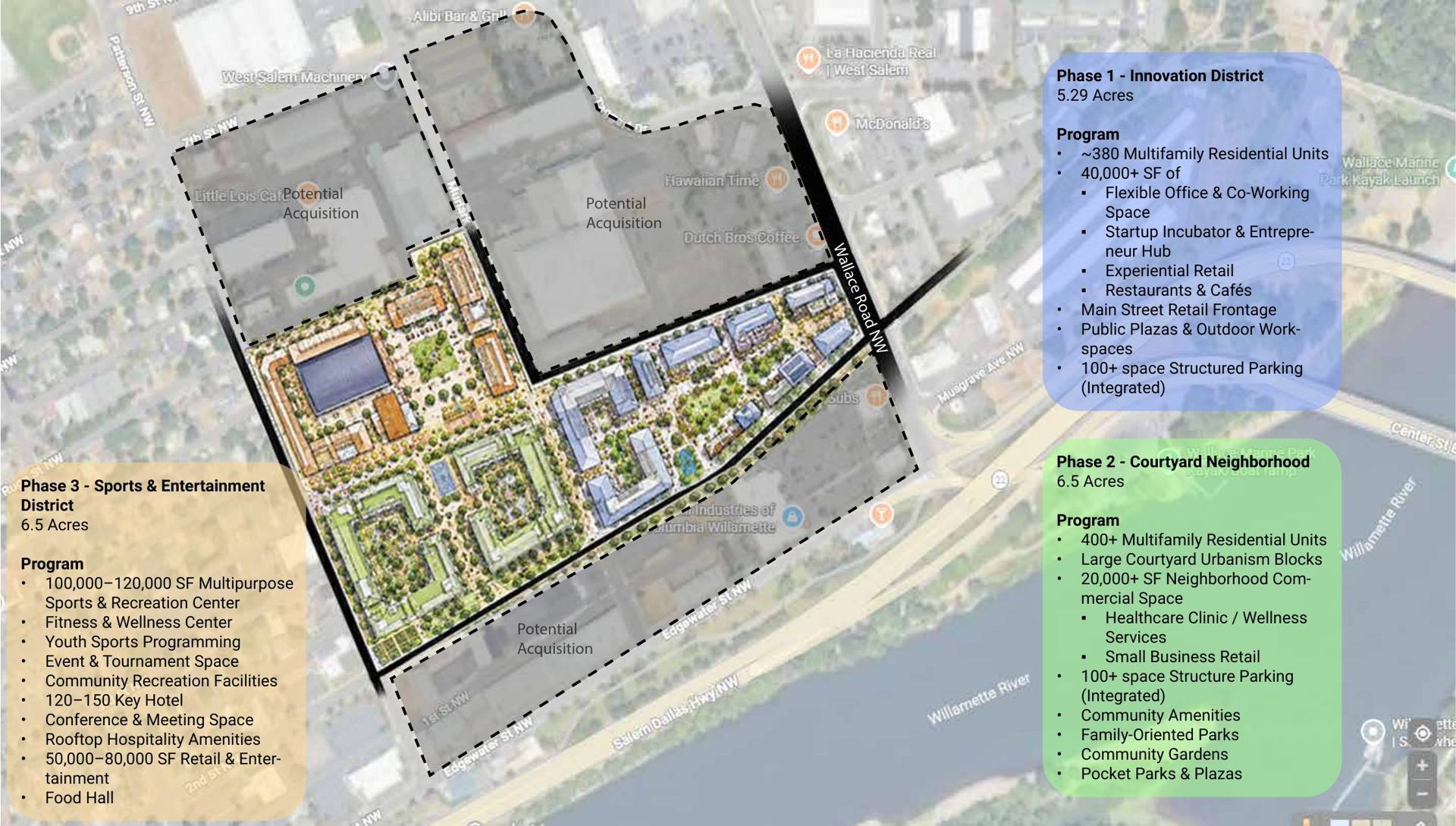
Phase 0

Site Control, Due Diligence & Capital Formation

Objective: Secure control of the full district while minimizing acquisition capital requirements and preserving flexibility.

Parcel Ownership

Phase 1 · 5.29 Acres

Mark May Property
Catalyst Development Site — 740 Bassett St NW

Phase 2 · 6.50 Acres

300 Patterson NW
Blackburn site #1 — 300 Patterson St NW

Phase 3 · 6.50 Acres

400 Patterson NW
Blackburn site #2 — 400 Patterson St NW

Phase 4 · 3.9 Acres

809 Edgewater St NW
Blackburn site #3

Blackburn Site Control Options

Option Agreement

  • Exclusive right to purchase Blackburn parcels
  • Lowest upfront capital requirement
  • Allows full due diligence and entitlement work
  • Preserves acquisition flexibility

Lease with Option to Purchase

  • Long-term lease structure
  • Future purchase option at predetermined pricing
  • Existing leases continue generating revenue
  • Existing buildings can be repurposed for interim uses
  • Generates income while planning and entitlements proceed
  • Delays major acquisition capital requirements

Seller Participation

  • Blackburn contributes land into project entity
  • Receives ownership participation
  • Aligns long-term interests
  • Reduces acquisition funding needs

Hybrid Structure

  • Option agreement initially
  • Lease-option during planning period
  • Acquisition occurs upon financing and development milestones
The most resilient structure may be an option agreement that converts to a lease-option during entitlement and activation, with acquisition or land contribution occurring only after capital and development milestones are satisfied.

Due Diligence Program · Following site control · Estimated duration 6–12 months

Development Due Diligence

  • Environmental review
  • Title review
  • Survey
  • Utility capacity assessment
  • Infrastructure analysis
  • Existing lease review
  • Market studies
  • Entitlement strategy
  • Development feasibility
  • Construction cost analysis

Adaptive Reuse Diligence Note

For the 300 and 400 Patterson buildings, add code consultant review for occupancy changes, fire/life-safety upgrades, seismic/structural review of the bow truss buildings, MEP and sprinkler capacity, parking/circulation, environmental conditions, existing leases, and cost-to-activate versus cost-to-convert.

Phase 0B

Interim Activation & Revenue Strategy

West Salem Works — the lease-to-own adaptive reuse activation layer — is imagined as the operating prototype for the full district, not a separate project.

Preserve Existing Cash Flow

Prior to redevelopment:

  • Continue existing tenant leases where appropriate
  • Maintain occupancy and revenue
  • Offset carrying costs during entitlement period

Adaptive Reuse & Activation

Existing buildings may be repurposed for:

  • Startup incubators
  • Coworking space
  • Maker spaces
  • Food and beverage concepts
  • Event venues
  • Community gathering spaces
  • Recreation programming
  • Innovation showcases
  • Farmers markets
  • Seasonal events

300 Patterson · Middle Property

Interim adaptive reuse for AI, arts, coworking, construction technology, mobility technology, maker suites, light production, labs, food/beverage, events, and community programming.

400 Patterson · Bow Truss Buildings

Sports, wellness, indoor recreation, creative workspace, maker/live-work prototype, events, and community athletic programming. Any true residential live-work conversion should remain subject to code, cost, and demand validation.

576 Patterson · Note

576 Patterson is currently understood as lease-only and is not part of the acquisition plan at this stage. It may still support district activation through its built-out but currently vacant brewery facility and existing CrossFit gym.

Phase 0B Objectives

  • Generate early revenue
  • Build community support
  • Increase property visibility
  • Validate future uses
  • Establish Now City brand presence
  • Reduce holding costs

Existing Conditions

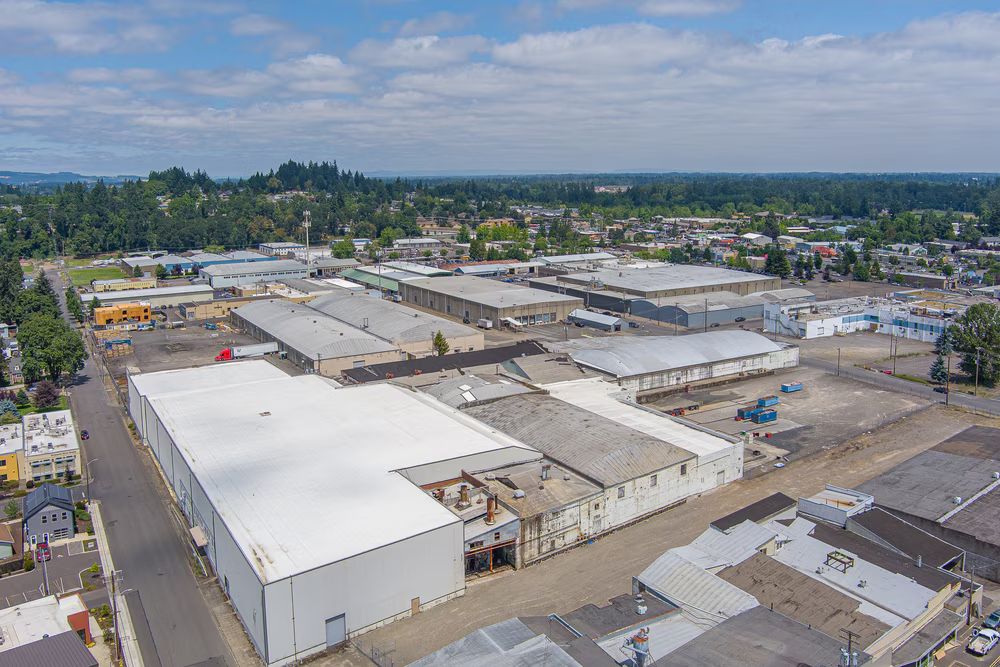
The district today — industrial buildings, big spans, and good bones along the Wallace Road corridor.

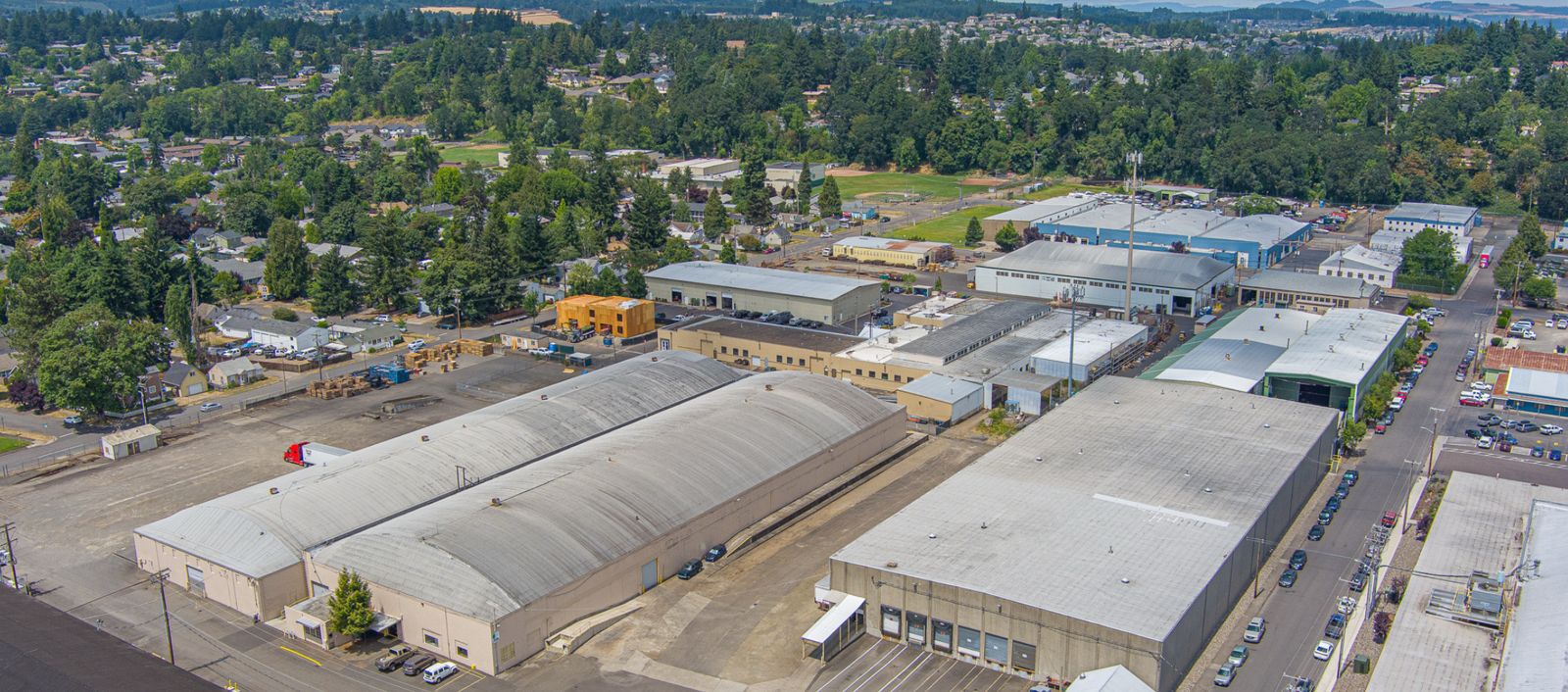
Aerial of 298 Patterson St NW warehouse buildings
300 Patterson — Middle Property, existing warehouse campus
Aerial of 325 Patterson St NW
400 Patterson — Bow Truss campus from above
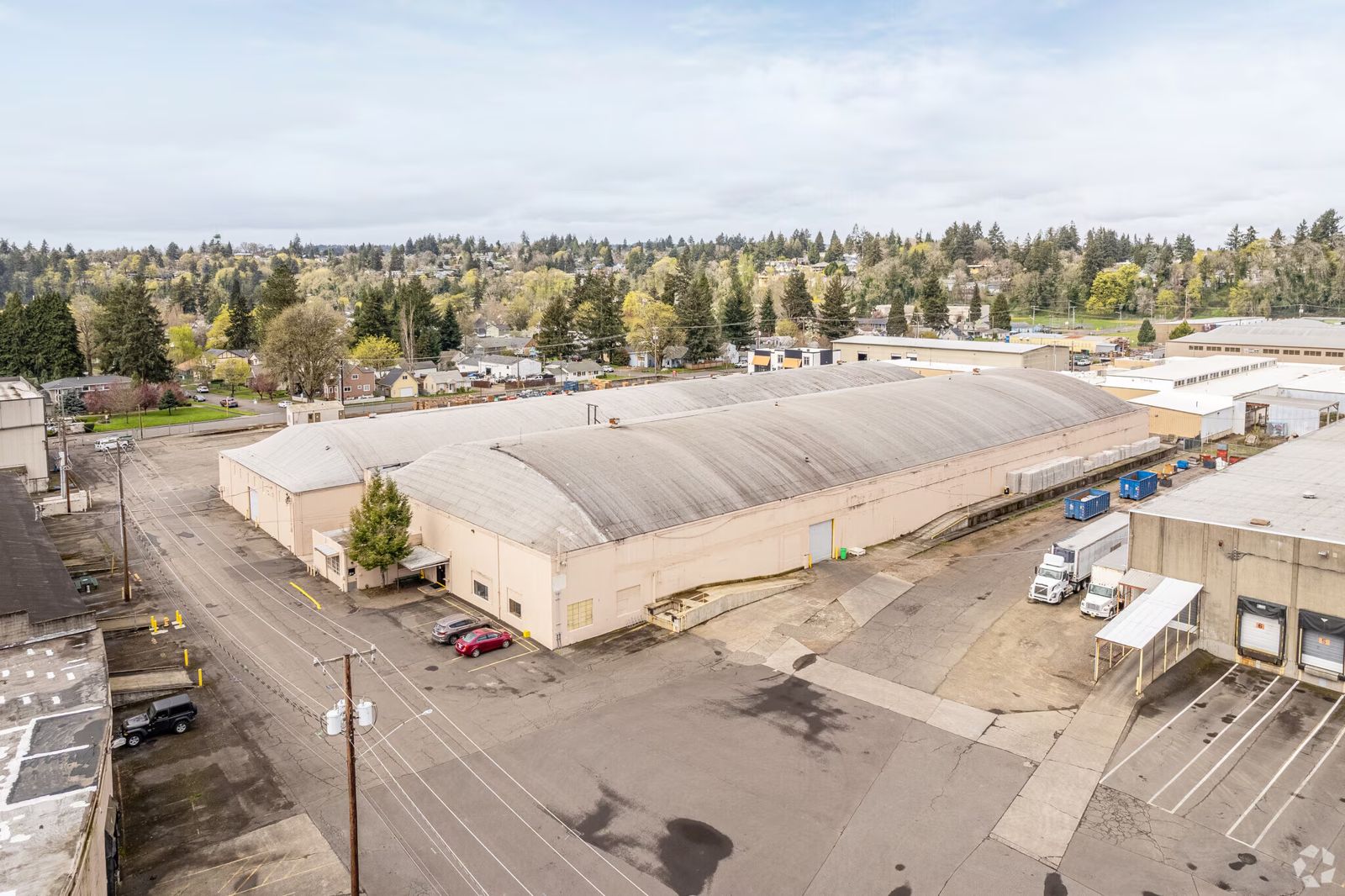
Bow truss building exterior
Bow Truss buildings — exterior
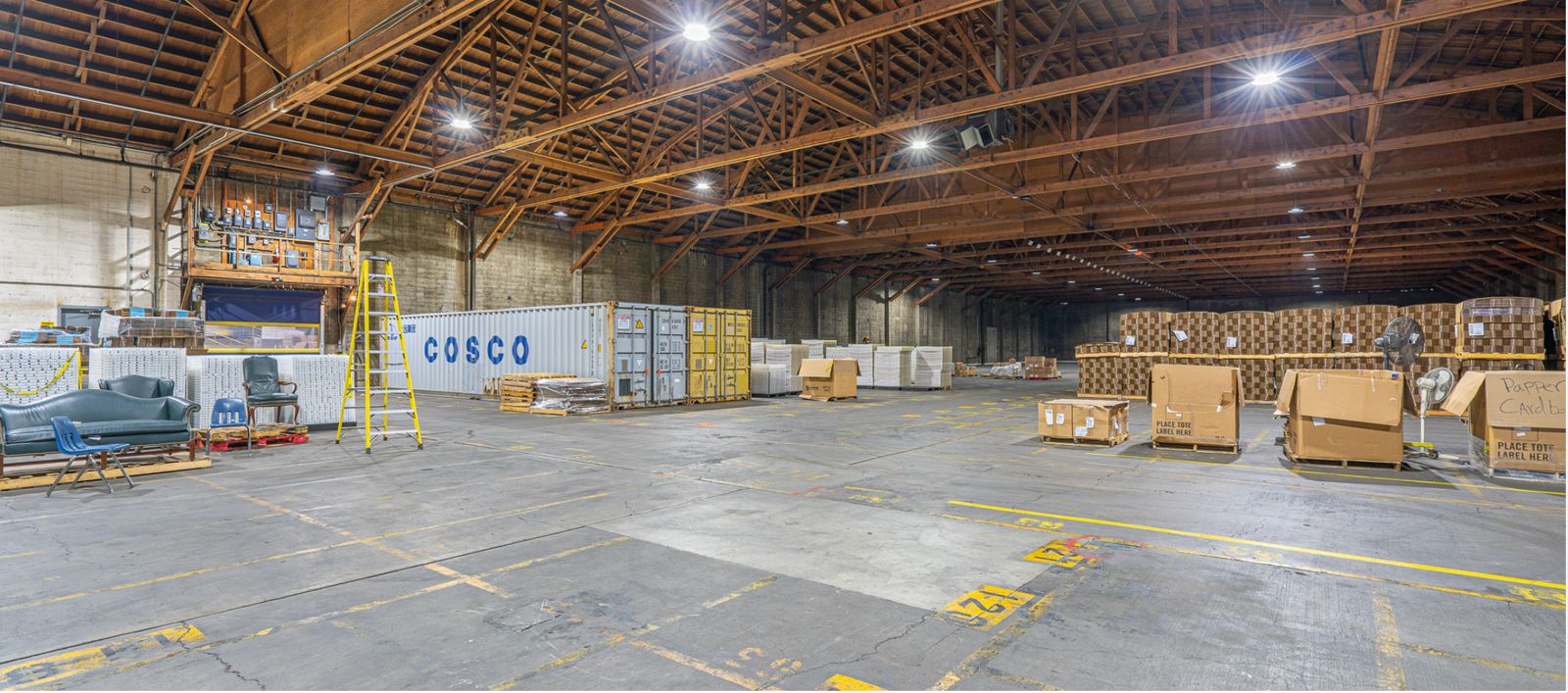
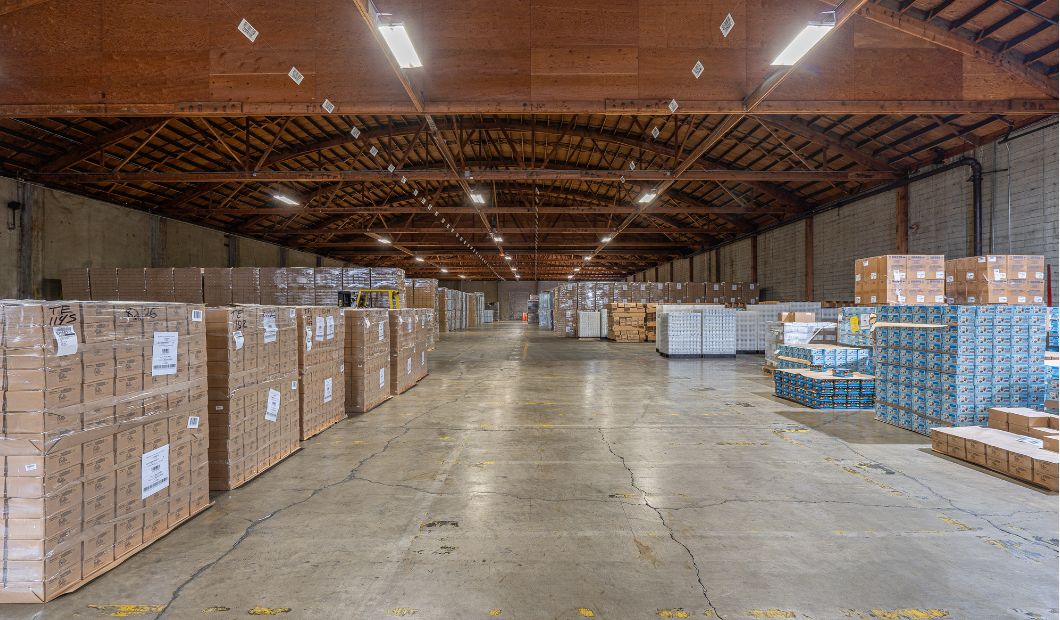
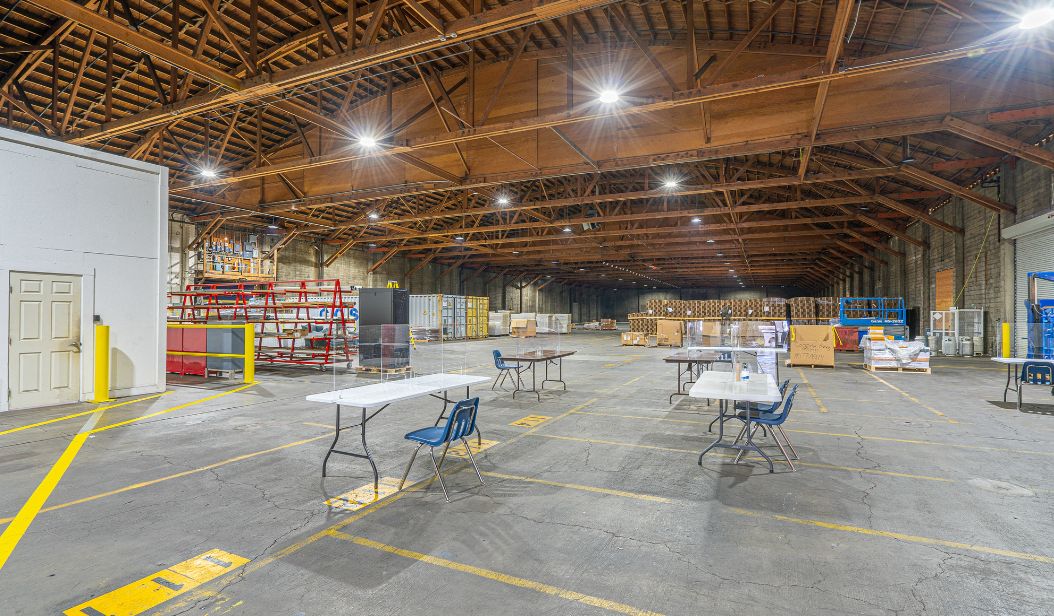
Bow truss warehouse interior with timber trusses
Bow Truss interior — clear spans, high ceilings, heavy timber
Initial Plan

400 Patterson: Bow-Truss Live-Work Campus

The initial plan is a lease-to-own structure for the 400 Patterson bow-truss warehouse campus — creating immediate income and proving district demand before full redevelopment.

Buildings 1 & 2 · Live-Work Lofts

  • Two of the three 40,000 SF buildings converted into 50–60 large, raw, high-ceiling live-work lofts
  • Roughly 1,500–2,000 SF each
  • Built fast and economically with modular/demountable interiors
  • Target hard-cost range starting around $50/SF

Building 3 · Sports & Wellness

  • Community sports and wellness center
  • Pickleball / padel courts
  • Fitness and indoor recreation
  • Youth programming
  • Events

Why It Works

  • Interim operating revenue from day one
  • Activates the district and builds community
  • Supports the lease-option economics
  • Helps finance eventual acquisition
  • Preserves flexibility if the buildings are later replaced by the permanent sports & entertainment phase
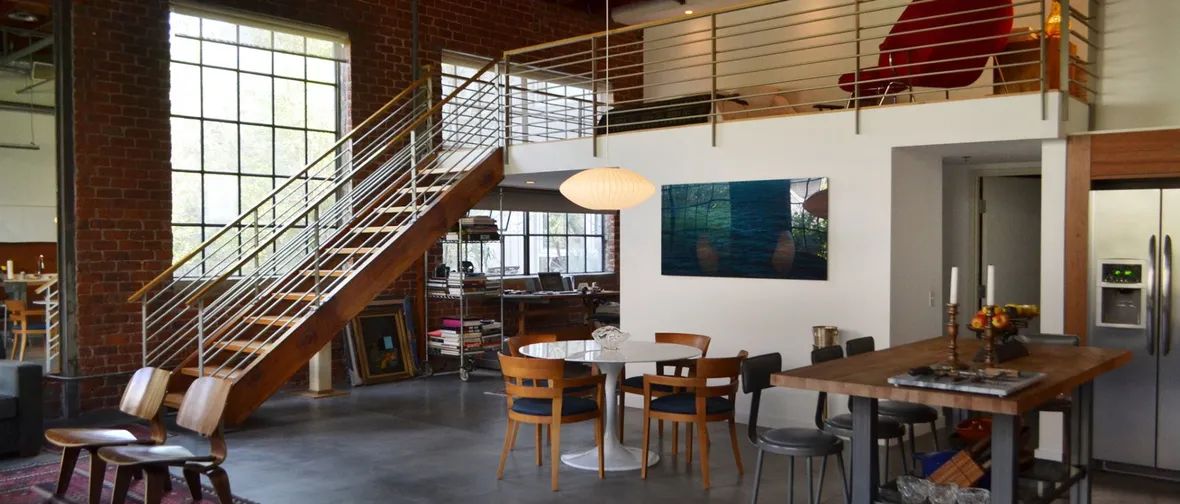
High-ceiling live-work loft reference interior
Raw loft interior reference with exposed structure
Gallery-style live-work loft reference

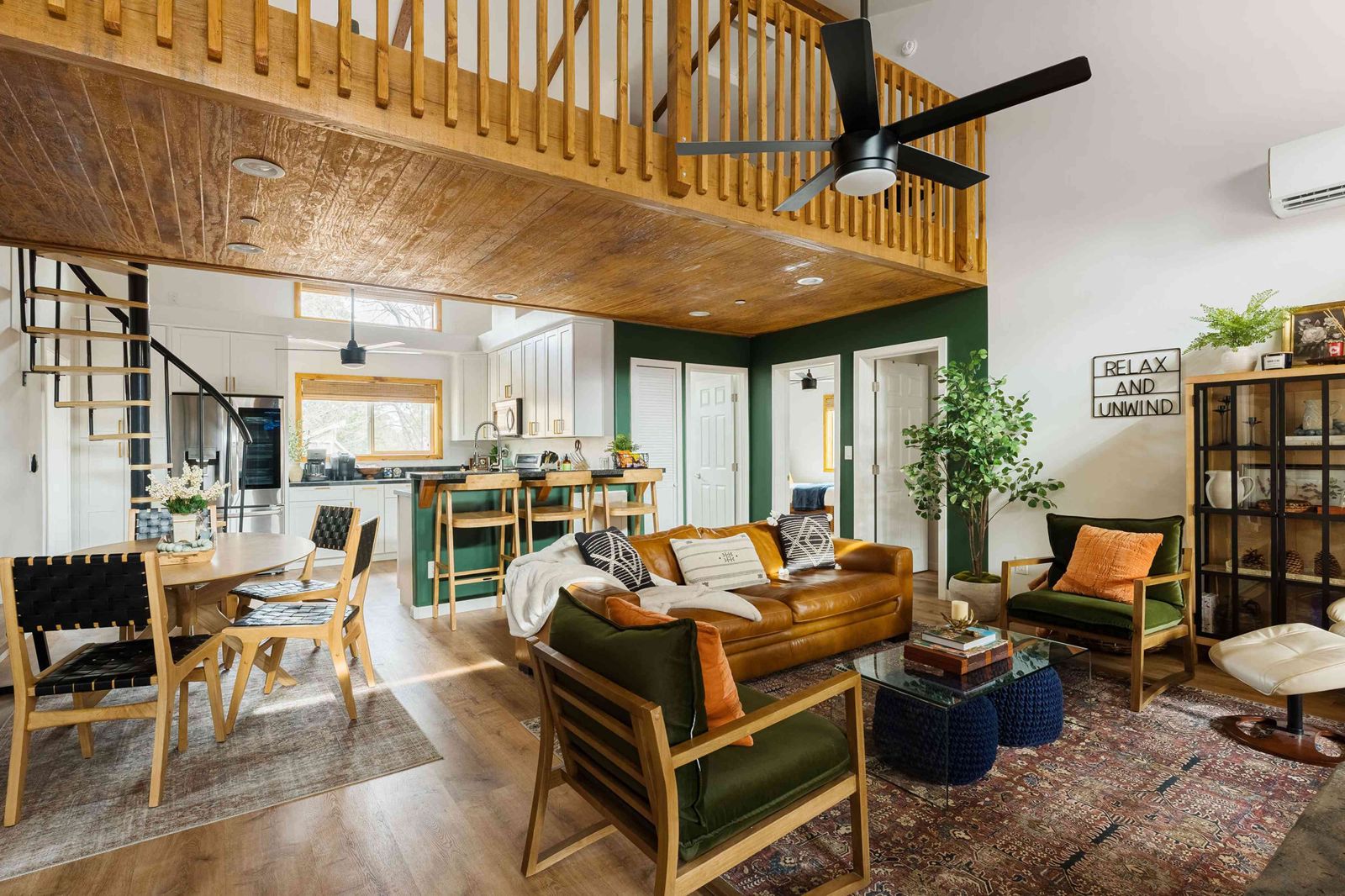
Live-work loft concept references

Bow truss interior volume
The raw material — 40,000 SF bow-truss volumes ready for modular fit-out
Bow truss interior with mezzanine
Existing mezzanine condition — a template for loft sections
Concept

The Arts District: 809 Edgewater + 300 Patterson

We imagine 809 Edgewater and parts of 300 Patterson as an Arts District — galleries, studios, markets, and evening programming that bring people to the riverfront early, build cultural identity, and seed demand for the district's later phases while preserving 809 Edgewater for its highest and best long-term use.

809 Edgewater Arts District interim use concept — evening riverfront market and galleries
809 Edgewater — Arts District interim use concept
Capital Formation Strategy

Multiple financing pathways, pursued simultaneously

Path A — Opportunity Zone Fund

  • OZ equity investors
  • Long-term 10-year hold
  • Construction financing
  • Institutional exit

Path B — Strategic Equity Partner

Potential partners:

  • Family offices
  • Institutional developers
  • Impact investment funds
  • Strategic operating partners

Benefits:

  • Acquisition capital
  • Development expertise
  • Shared risk

Path C — Bridge Loan + Equity

  • Acquisition bridge financing
  • Entitlement financing
  • Refinance into construction debt

Path D — HUD Financing

Applicable primarily to residential phases. Benefits:

  • Higher leverage
  • Long-term fixed-rate debt
  • Attractive multifamily financing
  • Supports attainable housing objectives

Path E — Hybrid Capital Stack

Combination of:

  • Mark May land contribution
  • Blackburn seller participation
  • OZ equity
  • Strategic equity
  • Bridge debt
  • HUD financing

This is likely the most flexible and resilient capital structure.

Willamette Wellness OZ Fund

District growth vehicle (Investment Summary):

  • $100M 10-year Qualified Opportunity Zone fund targeting district-scale control of up to 40 acres
  • $60M strategic acquisitions + $40M district enablement
  • Dedicated QOF → QOZB operating structure for OZ-eligible capital
  • Early value realization through refinancings and JV recaps, full OZ optimization at 10+ years
Lease-to-own control of 300 and 400 improves the capital story. The adaptive reuse campus can generate operating income, tenant commitments, event traffic, sports/wellness utilization, sponsorship potential, and community proof-of-demand before major vertical construction begins. This can reduce market and entitlement risk for OZ equity, strategic equity partners, and lenders.

District Baseline Financials

West Salem 18.5-acre financial projections — Confidential Investment Summary, May 2026

$400M
Total capitalization
$120M
Equity required (phased)
25%
Levered IRR
2.5x
Equity multiple
6.9%
Untrended yield on cost
10 yr
Investment term
Phase 1
Years 0–5

Innovation District + Residential Catalyst

Mark May Parcel · 740 Bassett St NW · 5.29 Acres

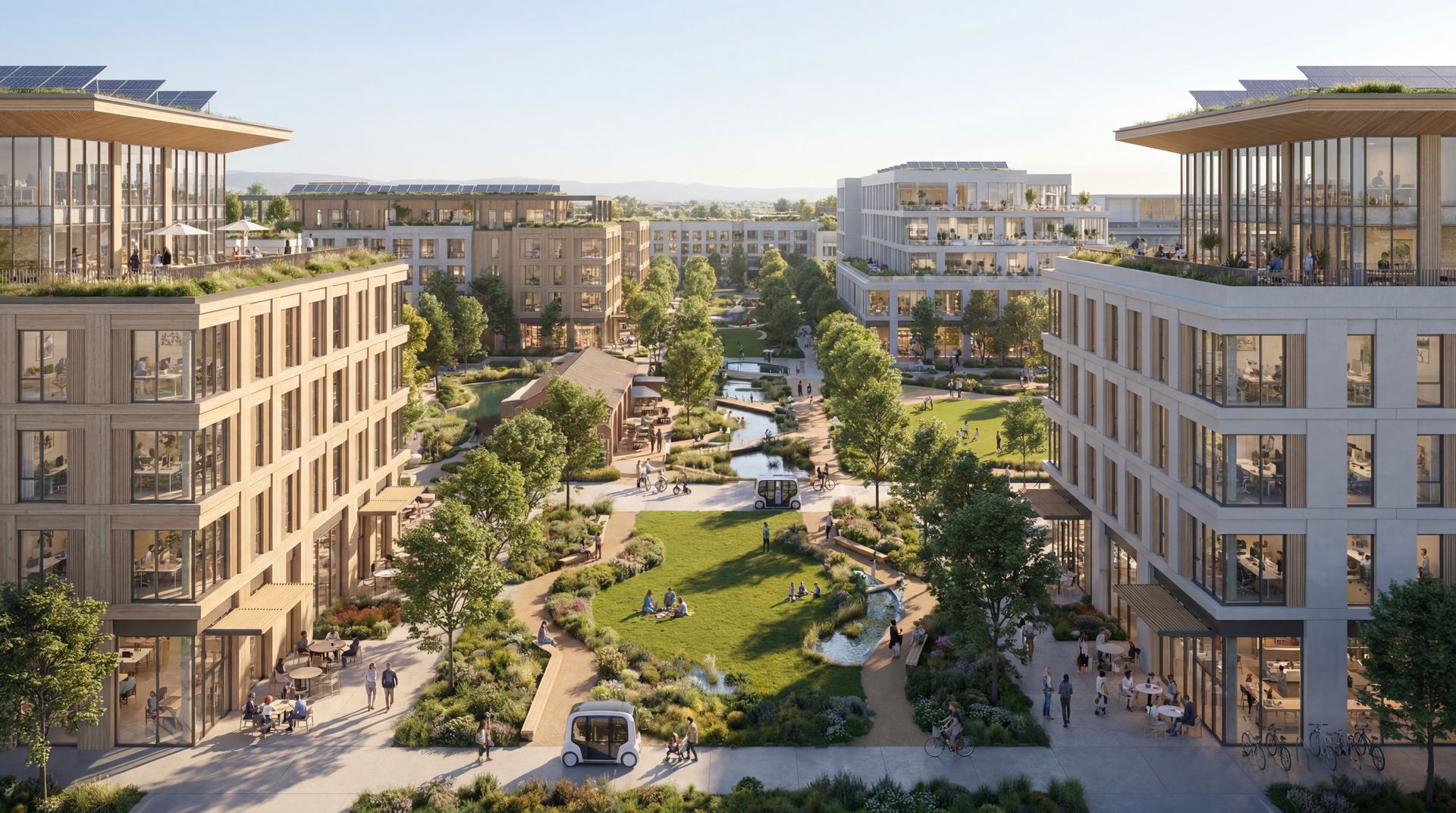
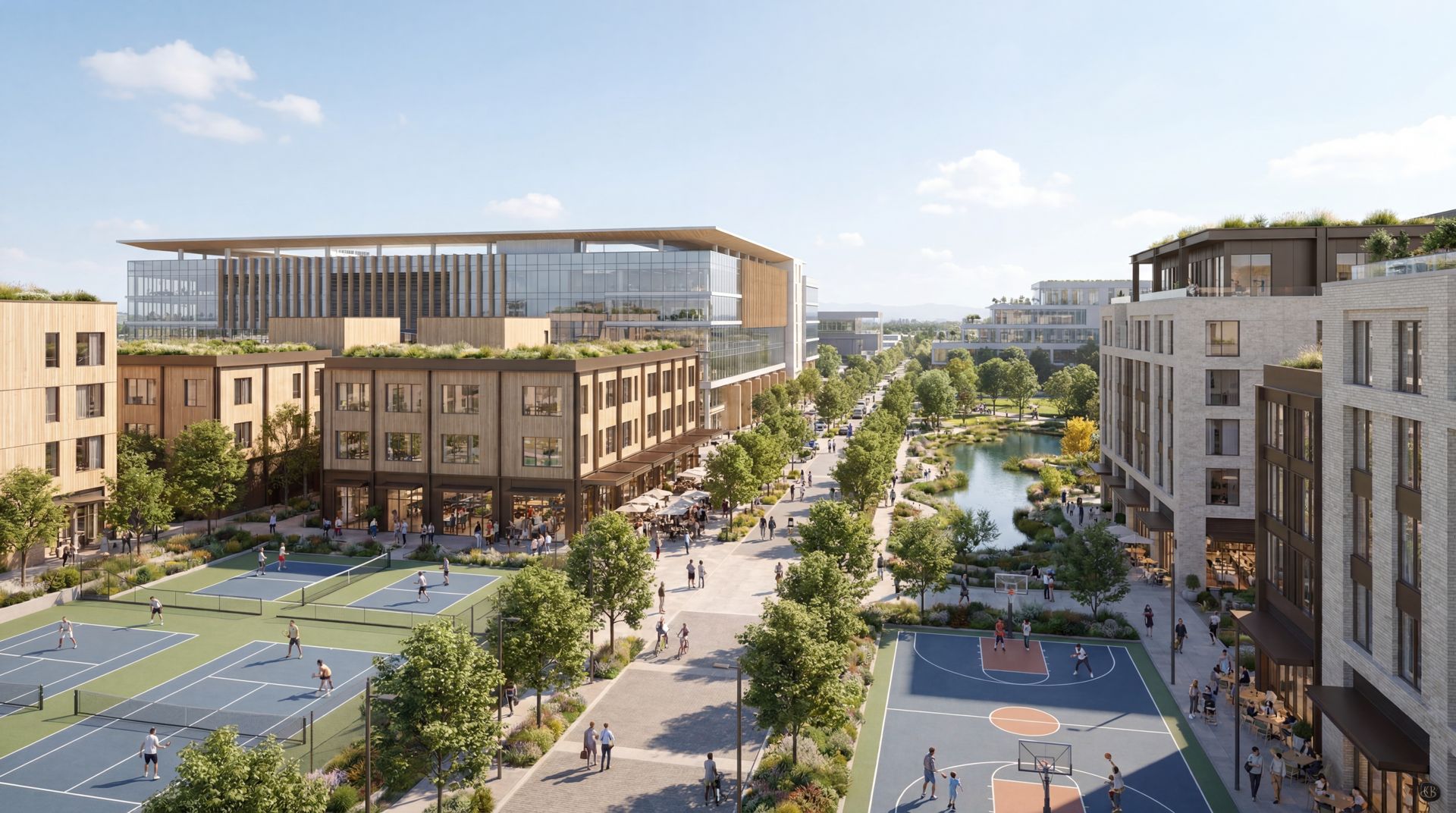
Phase 1 render — Innovation District central park and plaza
Phase 1
Innovation District — Central Park & Plaza

Residential

  • ~380 multifamily units
  • Courtyard multifamily buildings
  • Integrated townhouse product
  • Lease-to-own housing opportunities

Innovation & Commercial

  • 40,000+ SF Innovation Center
  • Startup incubator
  • Coworking space
  • Experiential retail
  • Restaurants & cafés
  • Main Street district

Public Realm

  • Innovation Commons
  • Public plaza
  • Outdoor workspaces
  • Structured parking
  • Pedestrian streets

Development Objectives

  • Establish Now City identity
  • Create first residential build
  • Create employment center
  • Generate recurring revenue
  • Increase value of Blackburn parcels
  • Prove development concept

Use operating data, tenant demand, event attendance, sports/wellness utilization, and tenant waitlists from West Salem Works to support Phase 1 financing, leasing, residential absorption, and public-sector confidence.

Townhouse Lease-to-Own Strategy

Ground-floor townhouse units become a signature housing product throughout the district, with multifamily apartments located above.

Features

  • Individual front doors
  • Street-facing entrances
  • Front gardens
  • Private stoops
  • Family-oriented floor plans

Benefits

  • Pathway to homeownership
  • Increased resident retention
  • Strong neighborhood identity
  • Expanded attainable ownership opportunities
  • Improved long-term community stability
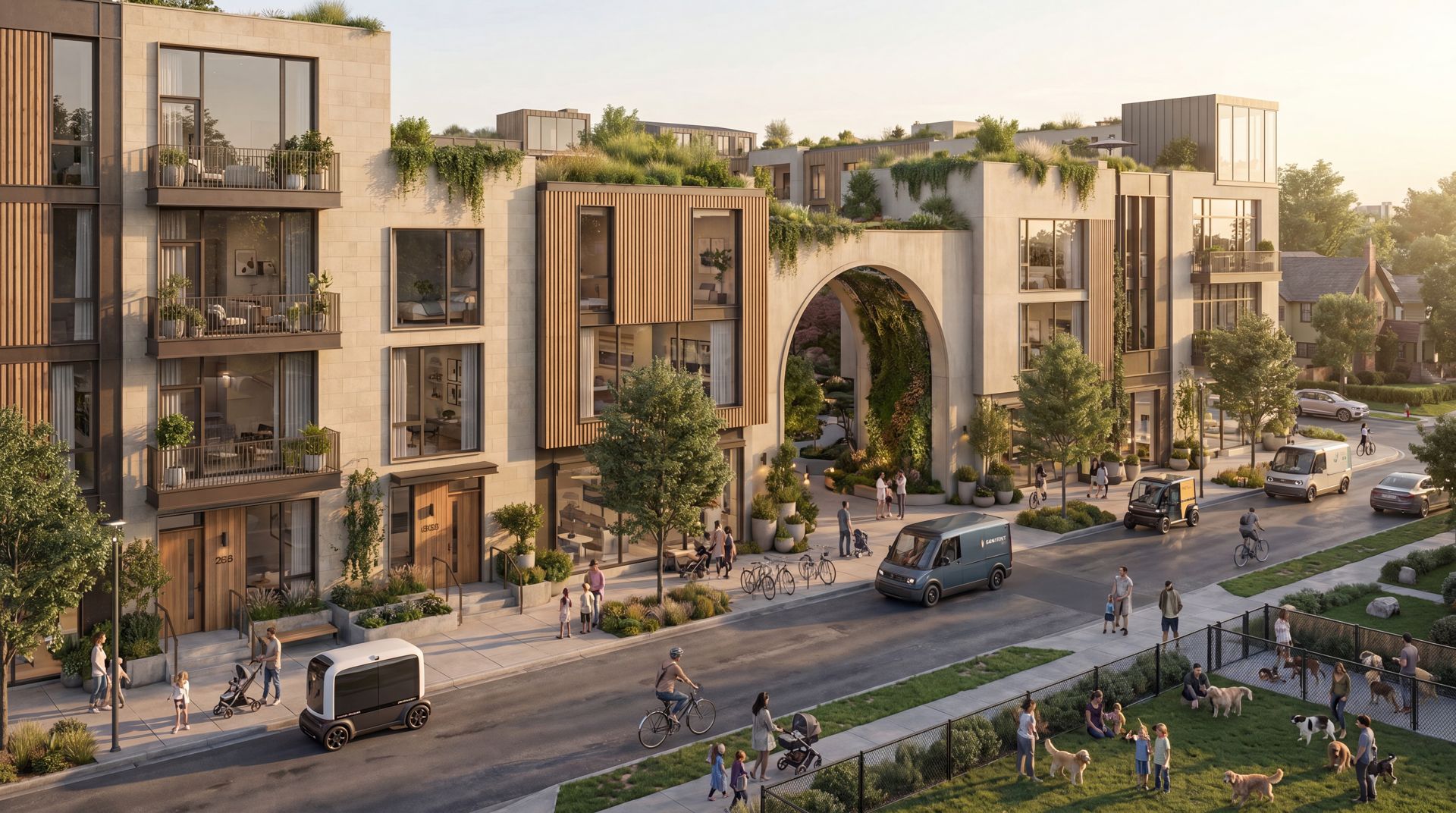
Phase 1 render — catalyst residential courtyards and multifamily
Phase 1 — Catalyst Residential: Courtyards + Multifamily
Year 0–1
  • LOI execution
  • Due diligence
  • Master planning
  • Entitlements
  • Capital raise
  • Financing commitments
Year 1–3
  • Construction
Year 3–5
  • Lease-up
  • Stabilization
  • Innovation district activation
Phase 2
Years 3–7

Courtyard Residential Neighborhood

Blackburn Parcel #1 · 300 Patterson St NW · 6.50 Acres

Development begins as Phase 1 approaches stabilization.

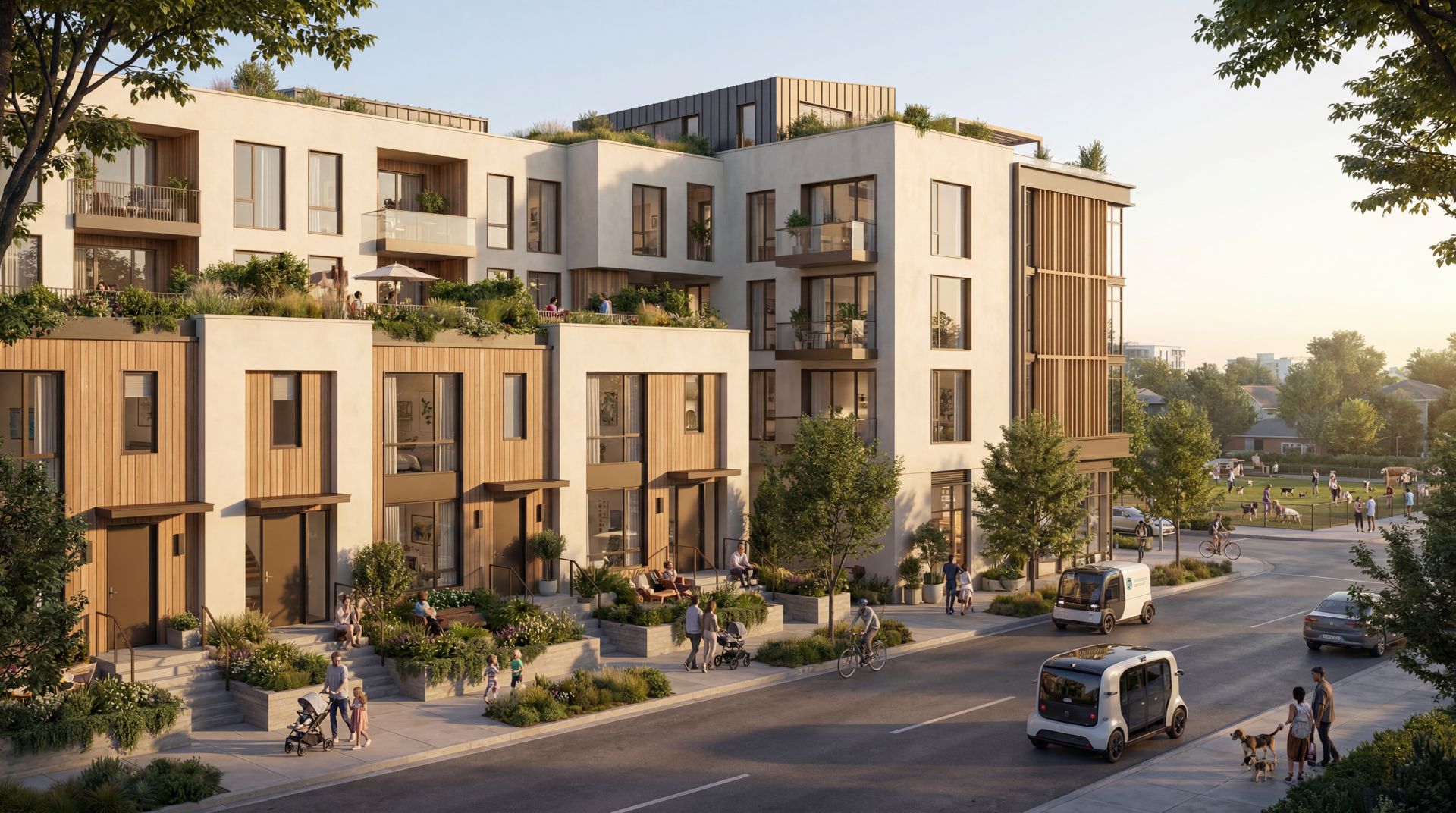
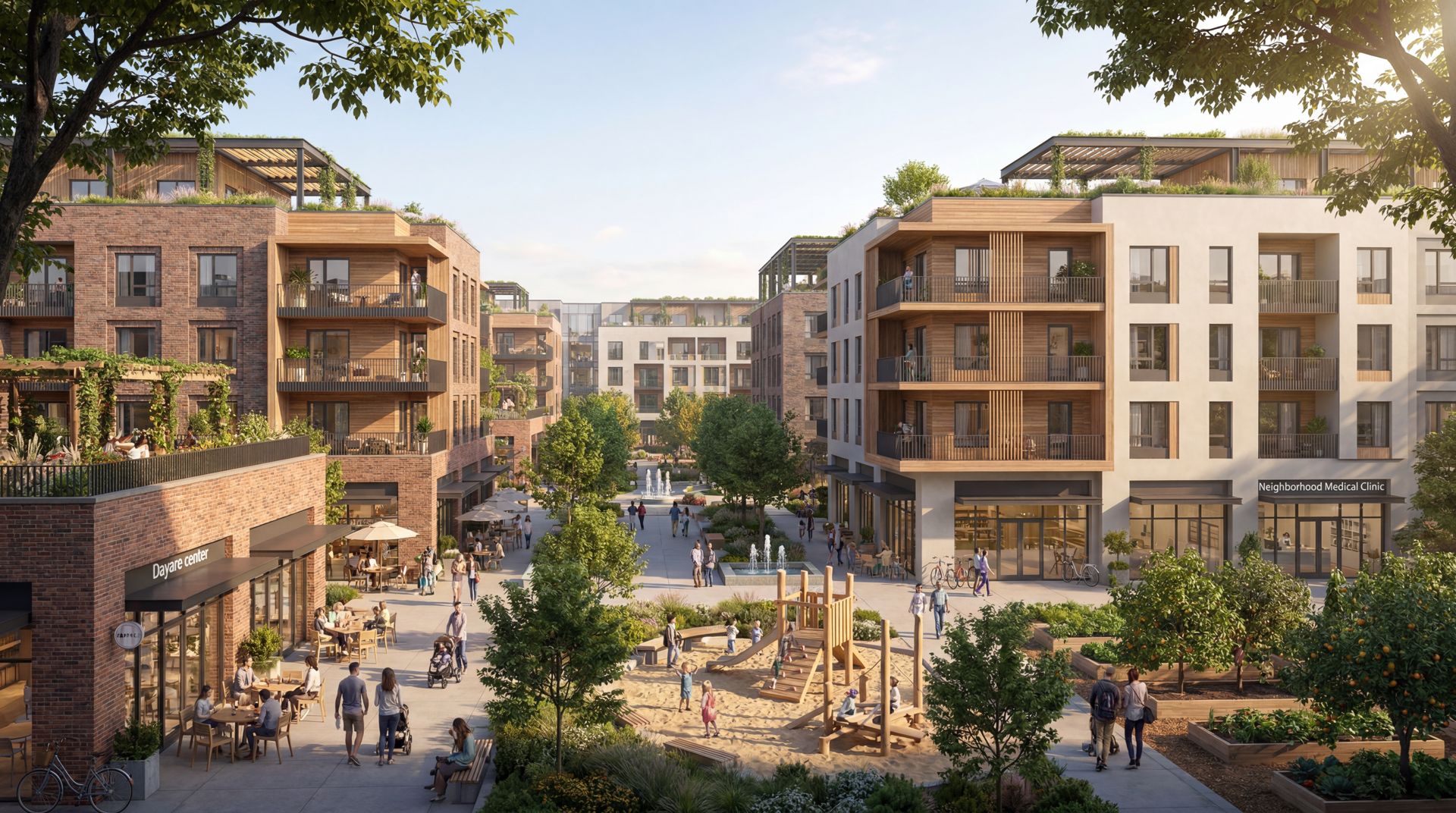
Phase 2 render — wellness neighborhood with water feature and courtyard housing
Phase 2
Wellness Neighborhood — Diverse Unit Types

Residential

  • 400+ multifamily units
  • Courtyard housing
  • Ground-floor townhouses
  • Lease-to-own opportunities

Community Services

  • Daycare
  • Healthcare clinic
  • Small business retail
  • Neighborhood café

Public Realm

  • Community gardens
  • Family parks
  • Children's play areas
  • Dog park
  • Pocket parks
  • Neighborhood plazas

Development Objectives

  • Expand residential base
  • Create family-focused neighborhood
  • Support commercial demand
  • Expand ownership opportunities
  • Increase district-wide value

Phase 2 should be informed by measured demand from Phase 0B and Phase 1, including tenant waitlists, live-work interest, daycare/clinic demand, food and retail sales, and family-oriented public realm usage.

Phase 2 Timeline

Year 3–4
  • Acquisition or option exercise
  • Design
  • Entitlements
  • Capital raise
Year 4–6
  • Demolition + construction
Year 6–7
  • Stabilization
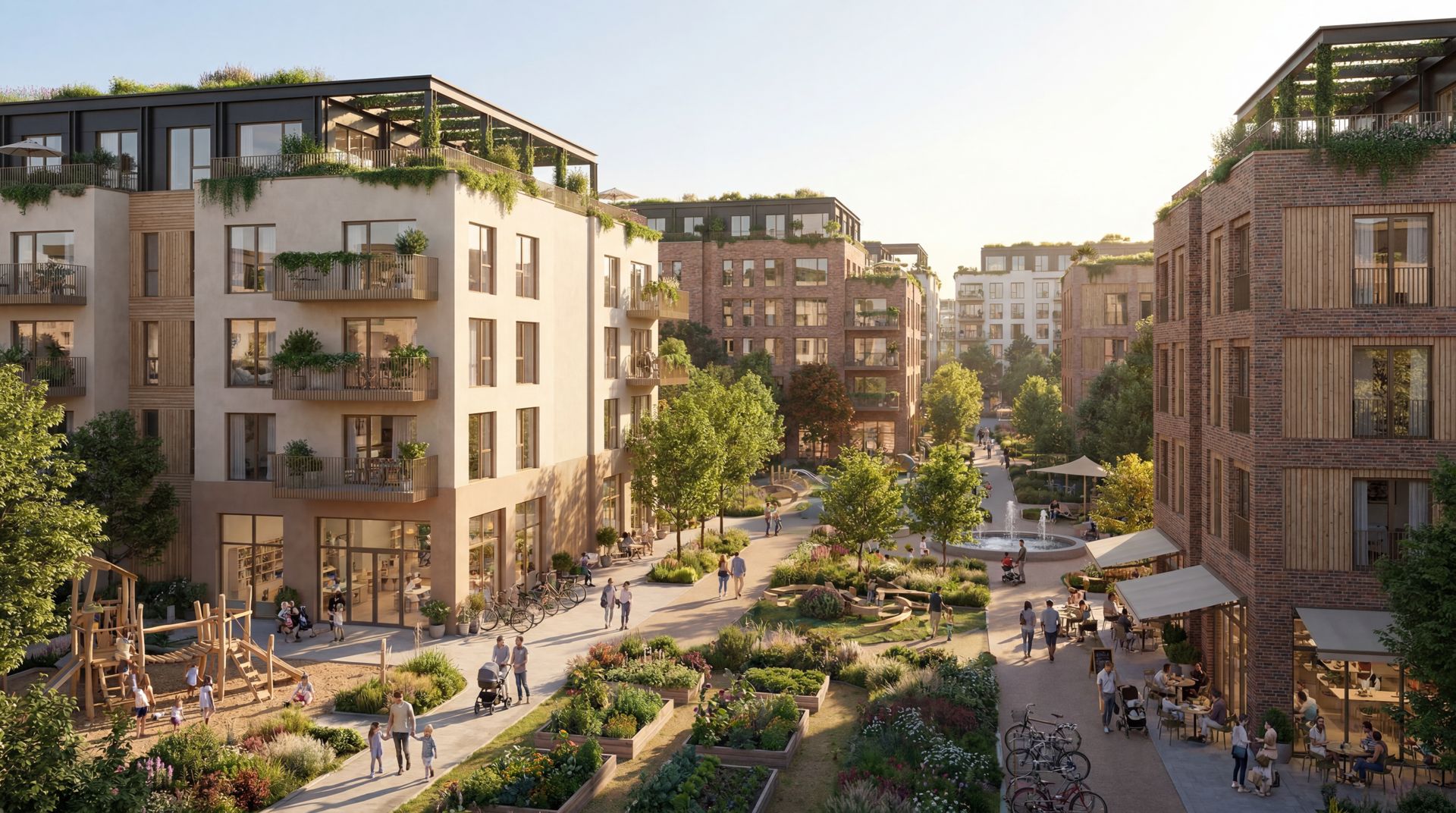
Phase 2 render — wellness neighborhood family services
Phase 2 — Wellness Neighborhood: Family Services
Phase 2 render — family lifestyle amenities
Phase 2 — Wellness Neighborhood: Family Lifestyle Amenities
Phase 3
Years 5–9

Sports & Entertainment District

Blackburn Parcel #2 · 400 Patterson St NW · 6.50 Acres

Developed after residential critical mass has been achieved.

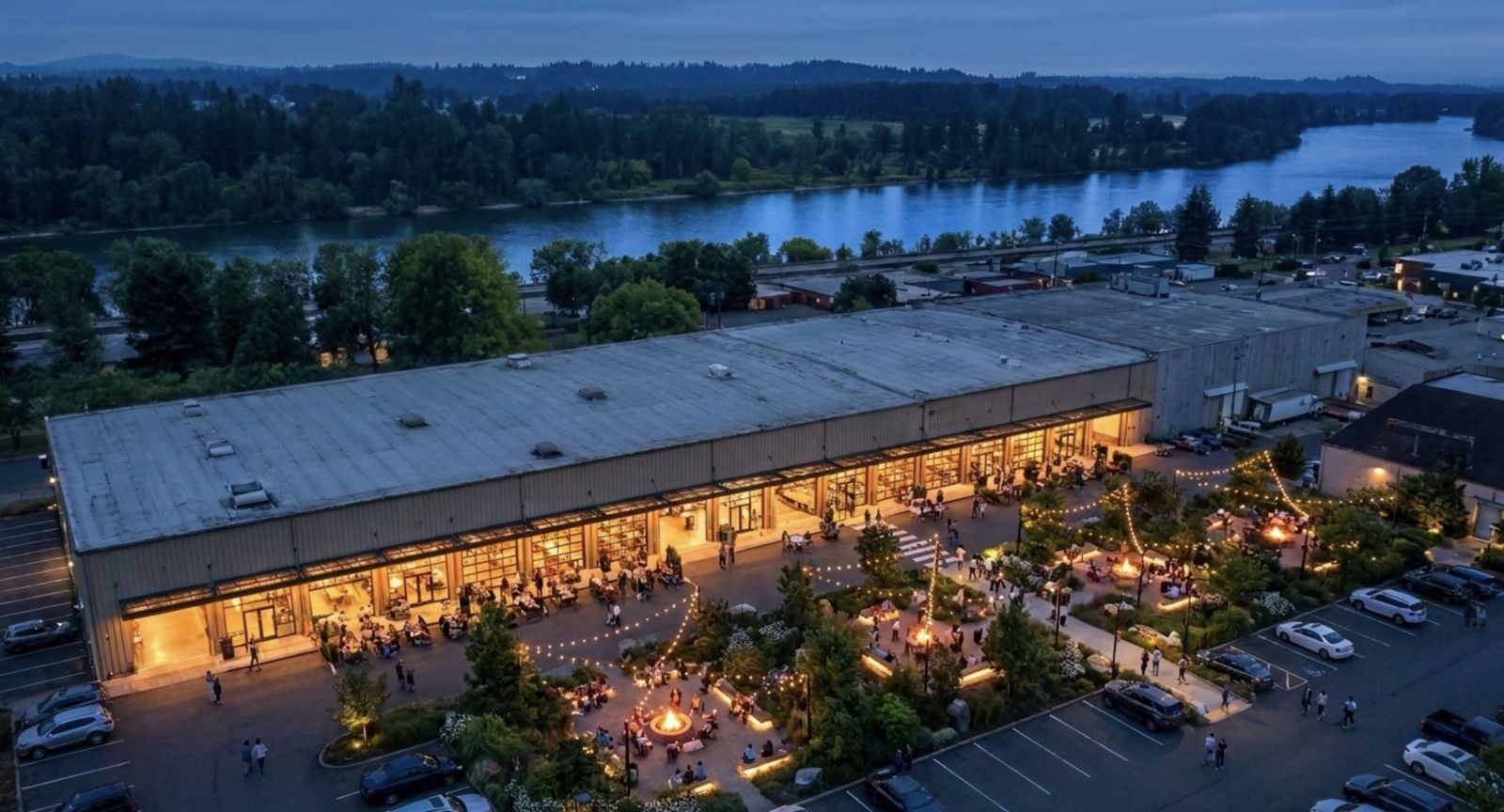
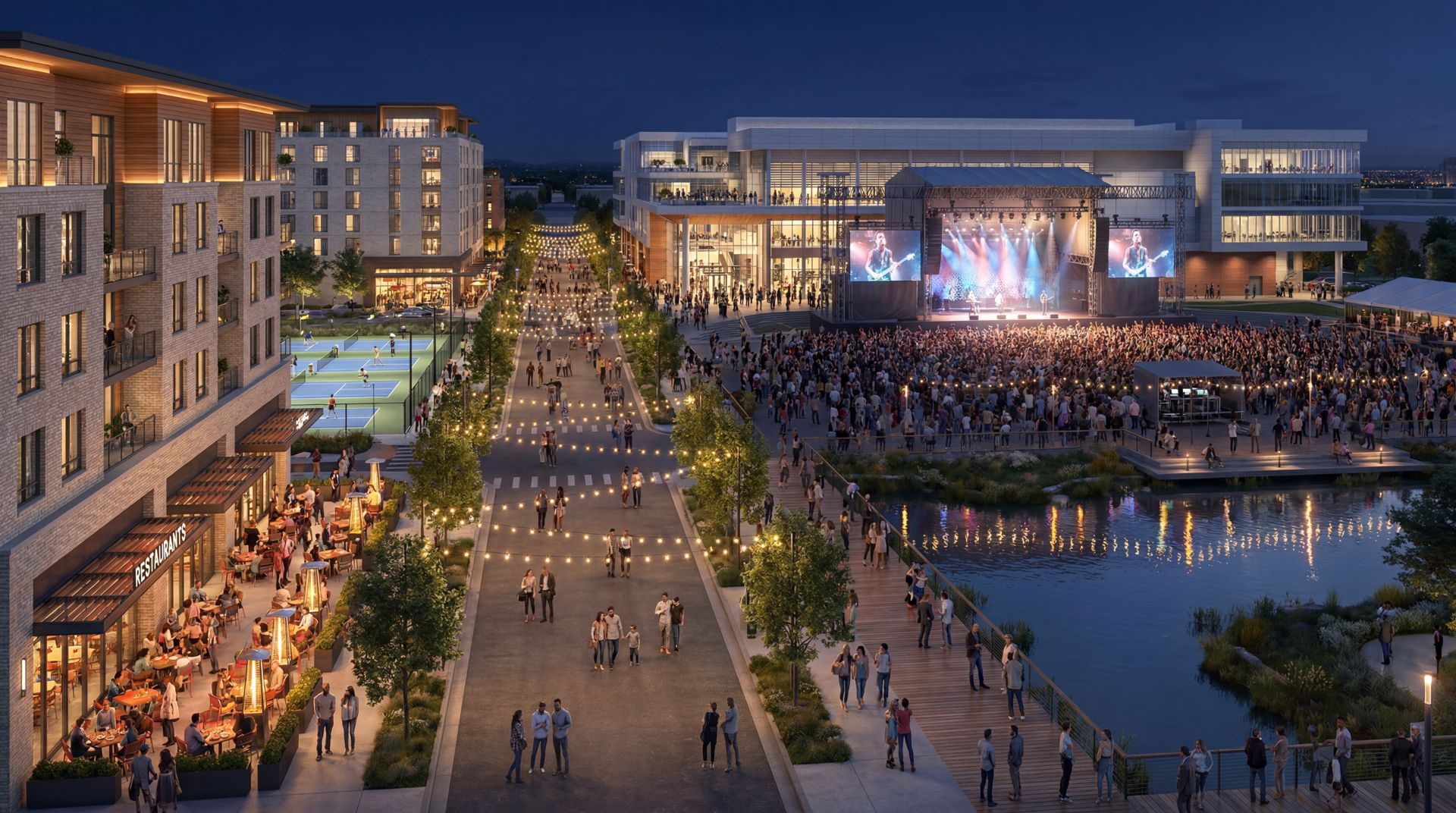
Phase 3 render — vibrant riverfront entertainment at dusk
Phase 3
Sports & Entertainment — Vibrant Riverfront

Recreation

  • 100,000+ SF Sports & Recreation Center
  • Pickleball courts
  • Fitness & wellness facilities
  • Indoor recreation
  • Community sports programming

Hospitality

  • Hotel
  • Meeting & event space

Entertainment

  • Food hall
  • Restaurants
  • Entertainment venues
  • Outdoor concert space

Public Realm

  • Event lawn
  • Festival plaza
  • Riverfront activation

Development Objectives

  • Create a regional destination
  • Increase tourism
  • Support hospitality demand
  • Drive retail sales
  • Activate the waterfront
  • Maximize district value

De-risk the permanent sports and recreation facility by piloting pickleball, padel, fitness, wellness, indoor recreation, youth sports, events, and tournaments in the 400 Patterson Bow Truss Buildings during Phase 0B.

Phase 3 Timeline

Year 5–6
  • Acquisition or option exercise
  • Design
  • Capital raise
Year 6–8
  • Demolition + construction
Year 8–9
  • Stabilization
Phase 3 render — sports and entertainment premiere destination
Phase 4
Later-Stage

Riverview Mountainview Penthouses & Multifamily

Blackburn Parcel #3 · 809 Edgewater St NW · 3.9 Acres

Developed after district critical mass has been achieved. Program: to be determined.

809 Edgewater should remain the later-stage river-adjacent value creation parcel. Because it is closest to the Willamette River, it should be protected for the highest and best long-term use rather than diluted by interim commitments that could constrain future design, public realm, views, or river-adjacent value.

Development Objectives

  • Create a regional destination
  • Increase tourism
  • Support hospitality demand
  • Drive retail sales
  • Activate the waterfront
  • Maximize district value

Timeline

Year 5–6
  • Acquisition or option exercise
  • Design
  • Capital raise
Year 6–8
  • Demolition + construction
Year 8–9
  • Stabilization
District Completion Metrics

What the finished district delivers

~780
Residential units
100–150
Lease-to-own townhouses
60,000+ SF
Innovation & commercial
100,000+ SF
Sports & recreation facility
100-key
Hotel

Public Realm

  • Central Park
  • Riverfront Greenway
  • Event lawn
  • Community gardens
  • Public plazas
  • Dog parks
  • Children's play areas
  • Pedestrian streets

Phase 0B Activation Tracking

Phase 0B activation should track occupied adaptive reuse square footage, operating revenue, event attendance, memberships, court utilization, tenant waitlists, community partners, and letters of intent from future retail, sports, wellness, and innovation operators.

How We Deliver More Without Spending More

Value-add strategies across the district

AI-native development, advanced modeling, data intelligence, automation, and modern delivery methods reduce design friction, compress timelines, lower soft costs, and provide the reporting backbone institutional capital now requires.

Regenerative Placemaking

Wellness, prosperity, and ecology data-driven community design.

Industrialized Construction

Modern methods that reduce cost, shorten schedules & minimize waste.

Green Infrastructure

Integrated energy, water & mobility systems that cut OpEx & boost resilience.

Innovative Finance

Stacked incentives + carbon & brand capital to enhance returns.

Underwriting reflects a conservative base case. In pre-development, these strategies are activated to improve returns for GPs and LPs, deliver superior outcomes for residents and stakeholders, and position the district to attract corporate partners and long-term owner-operators such as pension funds.

Exit Strategy · Years 9–10

Three paths to realized value

Following stabilization of all three phases:

Option A — District Sale

Sell the completed mixed-use district to an institutional investor.

Option B — Long-Term Hold

Refinance and maintain ownership as a long-term income-producing asset.

Option C — Component Disposition

Sell individual components separately: residential, innovation district, hotel, sports & entertainment district.

The interim adaptive reuse strategy should enhance all three exit paths by demonstrating that the district is not only entitled real estate, but an operating neighborhood platform with proven demand.

Opportunity Zone Outcome

The project is structured to align with a 10-year Opportunity Zone investment horizon while creating a replicable Now City model for future communities.

End State

A fully stabilized river-adjacent district that combines housing, retail, entertainment, hospitality, work space and community amenities while maximizing long-term value for landowners, investors, residents, and the broader West Salem community.

A place that people love.

Meet the Team

A district strategy & systems integrator

Now City operates as a district strategy and systems integrator, supported by a growing bench of development, construction, infrastructure, and operating partners. This model allows Phase 1 and early district phases to be executed by experienced local and regional teams with direct market knowledge, while Now City maintains continuity of vision, performance standards, and long-term district control. As the platform scales, execution capacity scales with it — through joint ventures, operating partnerships, and institutional collaborators aligned with district-level outcomes.

Leadership

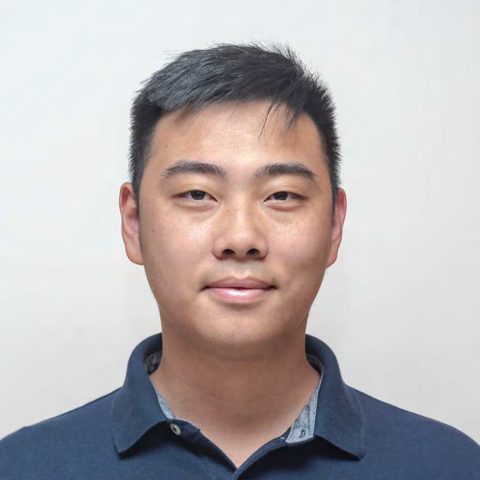
Erik Gillberg

Erik Gillberg

Co-Founder & CEO

Erik is a systems thinker focused on aligning capital, design, and operations into development that is financially viable, operationally sound, and grounded in care. He brings 30 years of property operations and 20 years in technology, business development, and startup leadership.

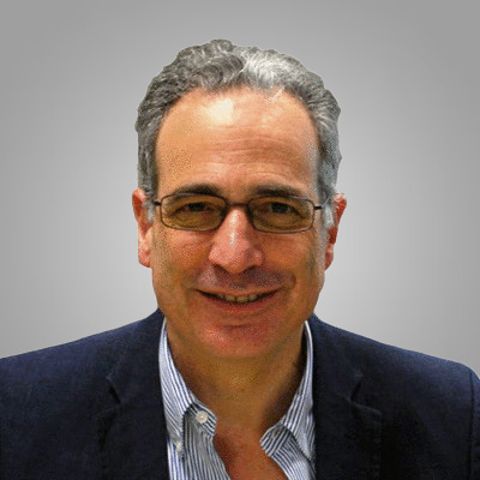
Ritchie Ju

Ritchie Ju

Co-Founder & COO

Ritchie leads design, development, and operations. B.Architecture from Carnegie Mellon, MS in Architecture and Urban Design from Columbia, MBA candidate at Johns Hopkins. Previously a mobility planner at Lyft in New York, where he led bike-share expansion, and later supported capital raise and development of a 1,000-unit multifamily mixed-use project in NYC.

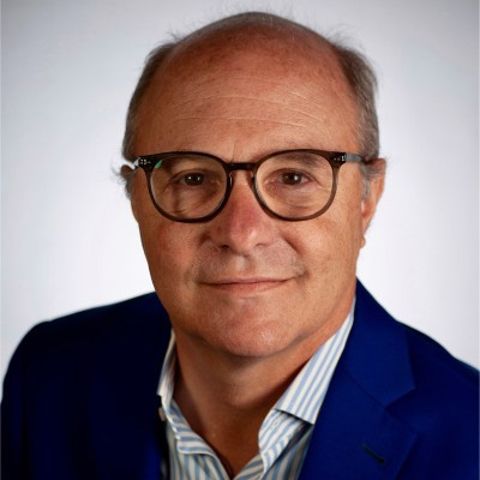
Brianna Gonzalez

Brianna Gonzalez

Head of Legal & Business Relations

Brianna is a securities and real-estate attorney and Managing Partner of Keiretsu Law. Her practice spans equity and debt securities offerings, fund formation, and innovative financing structures. Her background in public finance is a particular advantage for navigating public-private partnerships and municipal finance.

Senior Advisors

We work with senior advisors whose expertise is directly load-bearing for the work.

Michael H. Shuman

Michael H. Shuman

Advisor · Local Economies

Michael is an economist, attorney, and one of the architects of the 2012 JOBS Act. Adjunct Professor at Bard Business School and author of Put Your Money Where Your Life Is, The Local Economy Solution, and others. He advises Now City on community-rooted ownership, local capital formation, and finance models that keep wealth in place.

Neal Payton

Neal Payton

Advisor · Urban Planning & Design

Neal, FAIA, FCNU, directs the western U.S. urban and architectural design practice at Torti Gallas. His work focuses on master plans, form-based codes, and the public realm — especially the revitalization of declining urban centers, brownfields, and aging suburbs. He advises Now City on urbanism, master planning, and entitlement strategy.

Join Us

Be part of Salem's
transformation.

Visit nowcity.co to learn more about Now City.